[Golf Training] Does Sidespin Really Exist? Understanding How Spin Axis and Gear Effect Impact Your Ball Flight
Does "sidespin" really exist in golf? A breakdown of how the Spin Axis, Face-to-Path, and the Gear Effect truly determine your ball flight.

![[Golf Training] Does Sidespin Really Exist? Understanding How Spin Axis and Gear Effect Impact Your Ball Flight](/_next/image?url=https%3A%2F%2Ffirebasestorage.googleapis.com%2Fv0%2Fb%2Ftheswinghub-755b7.firebasestorage.app%2Fo%2Farticles%252Fimages%252F9d66b2a5-7a30-4f05-b99b-60a8055fc4a1-golf_spin_axis.jpg%3Falt%3Dmedia%26token%3Df9e9e9bf-c98d-4988-99db-35ebc47c7e96&w=3840&q=75)
Is There Such a Thing as "Sidespin" in Golf?
A golf ball is a solid sphere. During its flight, it is physically impossible for it to spin in two completely different directions (backward and sideways) at the same time. At the exact moment of impact, the ball is heavily compressed by the clubface, ultimately generating a single, unified spin vector. What truly determines whether you hit a beautiful draw or a destructive slice is the tilt angle of the Spin Axis.
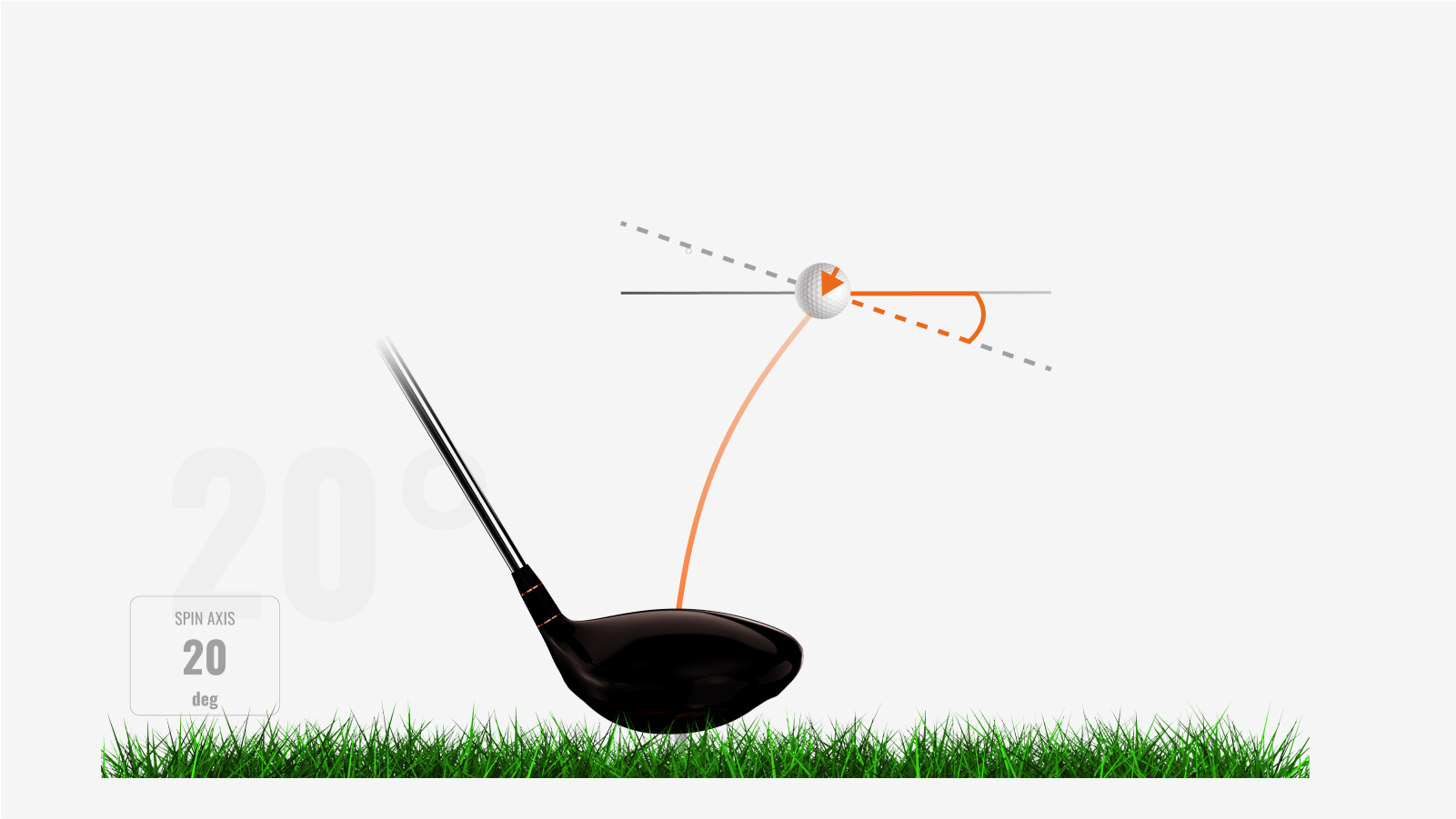
What is the Spin Axis? The Secret of Aerodynamics and the "Lift Vector"
According to aerodynamic principles, a golf ball stays in the air because pure "backspin" generates a vertical, upward Lift Vector (known as the Magnus effect).
To understand how the Spin Axis causes the ball to curve, we can imagine the golf ball as an airplane in mid-flight:
Level Wings (0° Spin Axis): The plane's wings are completely parallel to the horizon, and the lift is 100% straight up. The ball will launch dead straight with zero lateral drift.
Banking Left (Negative Spin Axis, e.g., -5°): When the pilot tilts the left wing down, the vertical "Lift Vector" tilts to the left. This lateral pull forces the ball to curve left in the air, creating a Draw or Hook.
Banking Right (Positive Spin Axis, e.g., +8°): When the right wing dips, the Lift Vector pulls to the right, naturally creating a Fade or Slice trajectory.
The Law of Ball Flight: A golf ball will always curve in the exact direction that the Spin Axis is tilted. The larger the tilt angle, the stronger the lateral pull, and the more violently the ball will curve in flight.

What Causes the Spin Axis to Tilt?
The tilt of the spin axis doesn't happen out of thin air. There are two primary elements that twist your spin axis:
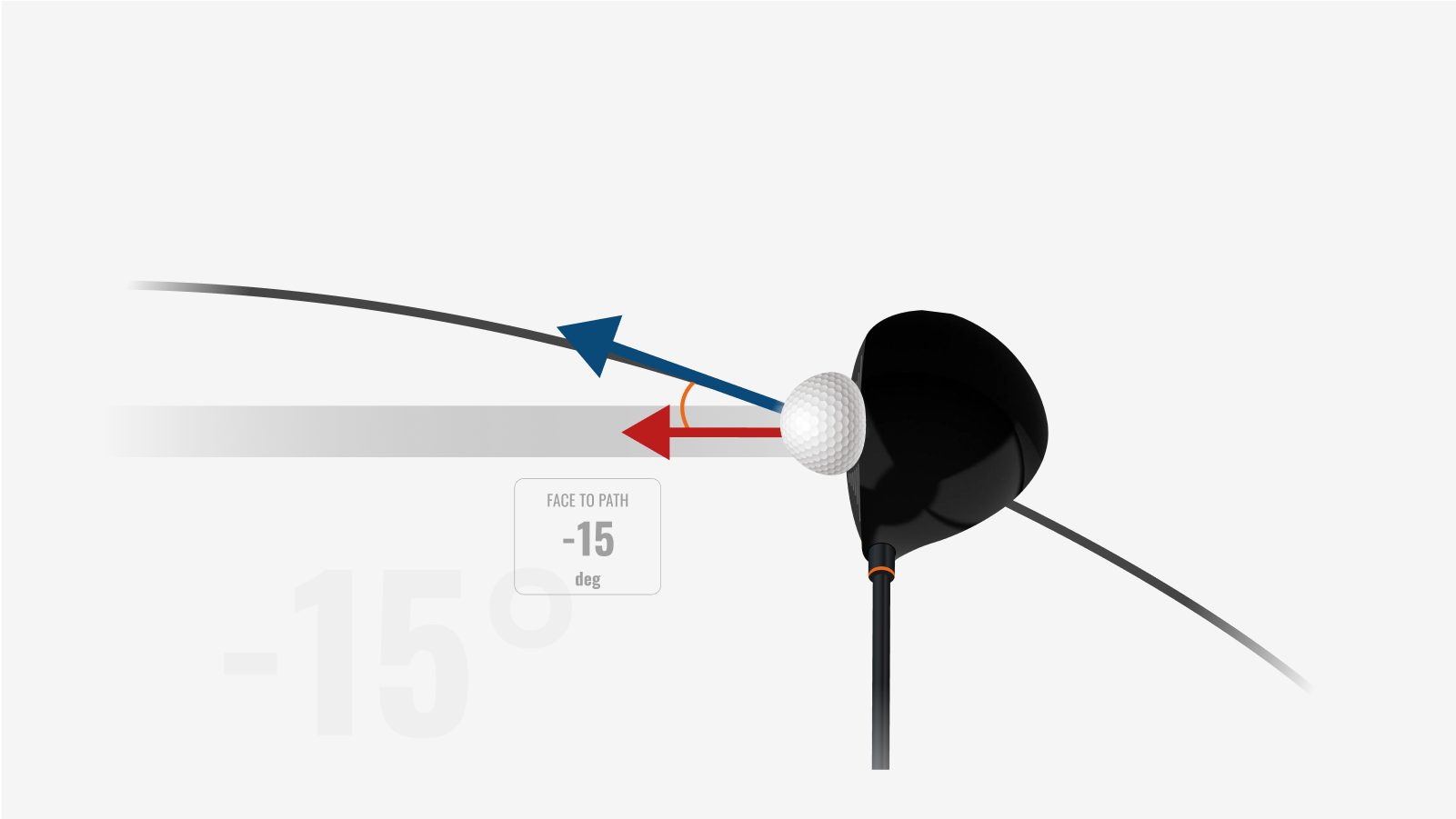
1. Face-to-Path
This is the most critical relational metric in launch monitor data. When the clubface is open or closed relative to your swing path, the face delivers a "glancing blow" to the ball, forcing the spin axis to tilt.Negative Tilt (Draw): The clubface is Closed relative to the swing path.
Positive Tilt (Slice): The clubface is Open relative to the swing path.
2. The Gear Effect
Even if your Face-to-Path is perfectly zeroed out, if you do not strike the center of the clubface, the ball will still curve violently. Imagine the clubhead and the ball as two interlocking gears:Toe Strike: Striking the outer edge of the face (the toe) forces the clubhead to twist to the right. Because of the gear interaction, the clubhead twisting right forces the ball to spin to the "left." This instantly tilts the spin axis to a negative value, producing a draw or hook.
Heel Strike: Striking near the inner shaft (the heel) forces the clubhead to twist to the left. The gear effect forces the ball to spin to the right, resulting in a positive spin axis and producing a fade or slice.
The "Multiplier Effect" of Speed and Loft
If you are holding a driver equipped with a carbon shaft and swinging at a blazing clubhead speed of 100 mph, a minor +5 degree spin axis tilt—combined with low backspin conditions—will translate into an extremely violent drift to the right.
Conversely, if you switch to a highly lofted wedge, the immense amount of backspin acts like a powerful gyroscope, forcibly suppressing the lateral impact of that exact same 5-degree axis tilt and keeping the ball relatively straight. This is exactly why your short irons fly straight, while your driver scatters wildly.
The Coach's Data Reference Guide
According to PGA Tour averages, elite professionals can typically keep their driver's spin axis tightly controlled between -2° and +2°:
| Radar Spin Axis Value | Resulting Ball Flight (Right-Handed Golfer) |
| 0° to -2° | Baby Draw |
| -3° to -8° | Standard Draw |
| More than -10° | Snap Hook |
| 0° to +2° | Controlled Fade |
| +3° to +8° | Traditional Fade / Slice Miss |
| More than +10° | Severe Slice |
Ultimately, by accurately mastering the previously mentioned Face-to-Path and the impact-solidness metric known as Smash Factor, you can create a stable Spin Axis condition, allowing you to consistently hit a highly controlled ball flight. Feel free to read our two previous related articles here: